Physics of Biological Systems

Our research focuses on utilising the tools of statistical mechanics, nonlinear dynamics, and condensed matter physics to address fundamental questions in the physics of biological systems.

Research in Focus
Target Search using intersegmental jumps

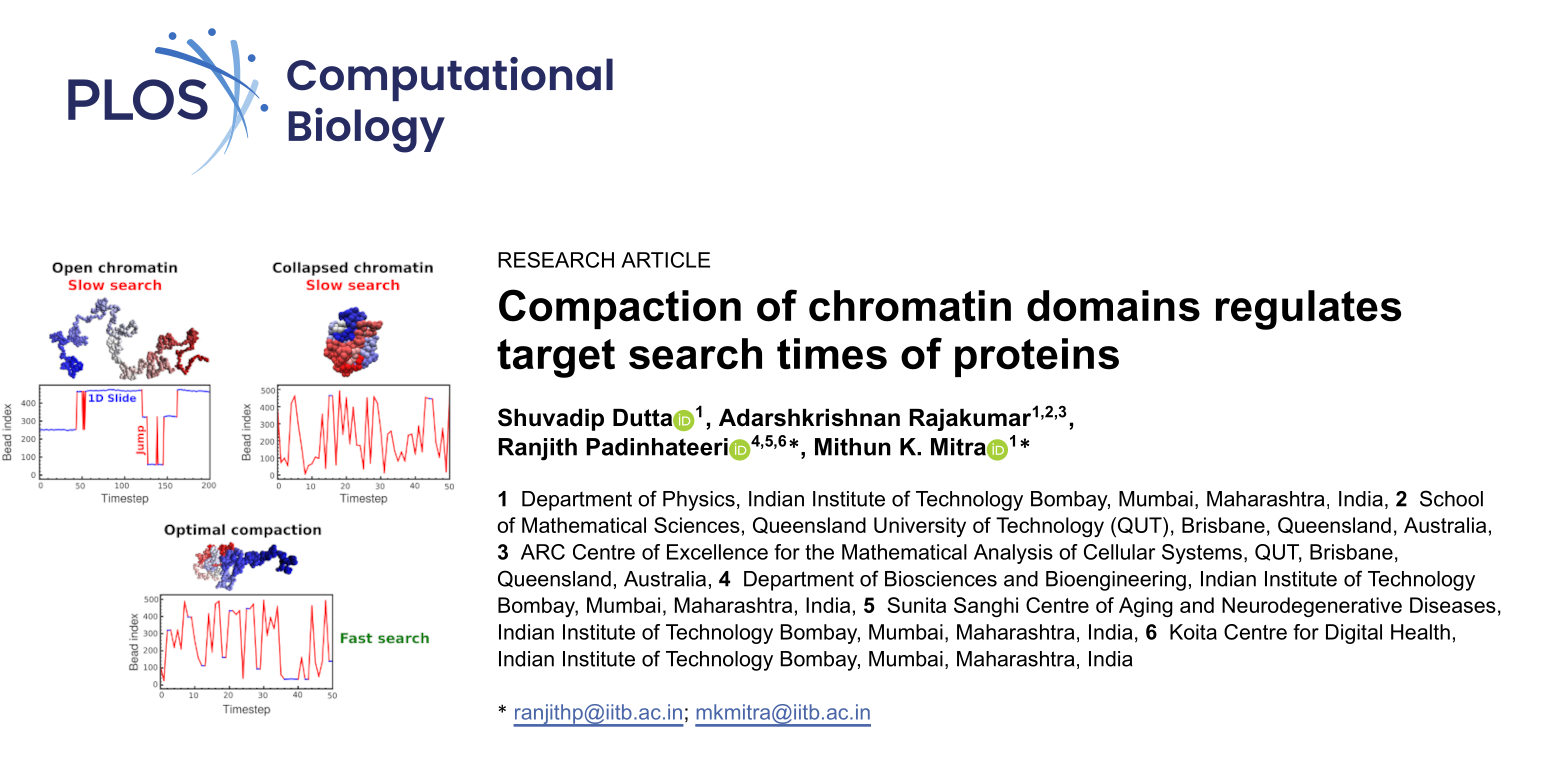
Inside the dynamic world of cells, proteins must quickly locate specific sequences on chromatin to bind and execute their functions. Using exact analytic theory and computer simulations, we studied how the three-dimensional organisation of chromatin—especially into structures called Topologically Associating Domains (TADs)—affects the ability of proteins to locate their targets by jumping between spatially adjacent chromatin segments. Remarkably, we show that chromatin has an optimal connectivity which minimises the search time to locate the target. We then analysed experimental data for thousands of TADs from human chromosomes to show that the natural organisation of TADs falls within this optimum region. This suggests that chromatin topology plays a crucial role not only in spatial organisation, but also enables faster protein search and hence aids gene regulation.

PLoS Computational Biology, 2026

Read Paper
Barriers in heterogeneous media

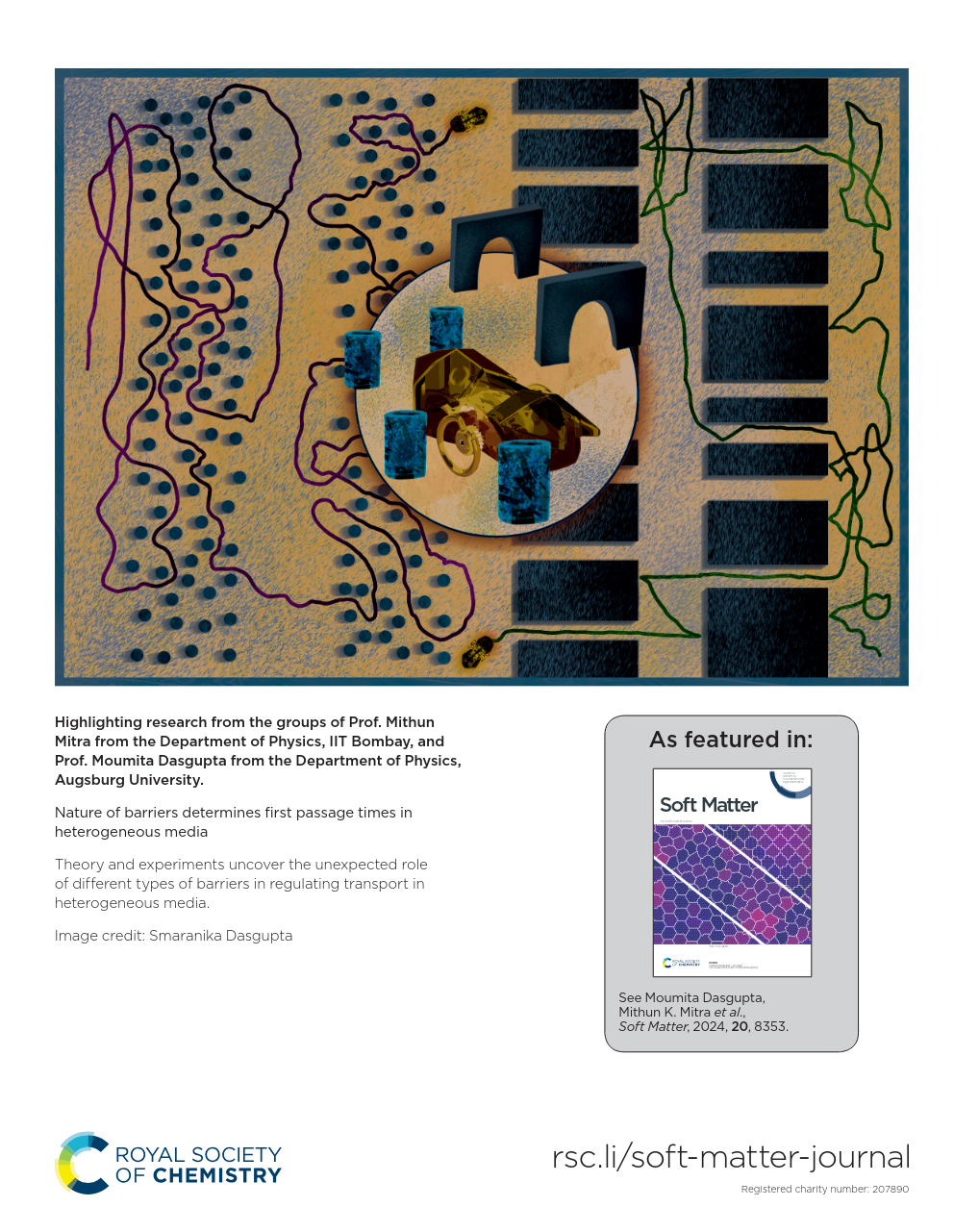
Sometimes, adding more barriers can speed up transport — if they're the right kind. Through theory, simulations and experiments, this study reveals a counterintuitive effect: while "entropic" barriers always slow diffusion, "energetic" barriers can actually make particles cross faster when arranged just right, overturning long-held intuition about how obstacles control motion.

Soft Matter, 2024

Read Paper
E. coli diffusion in microfluidic confinement

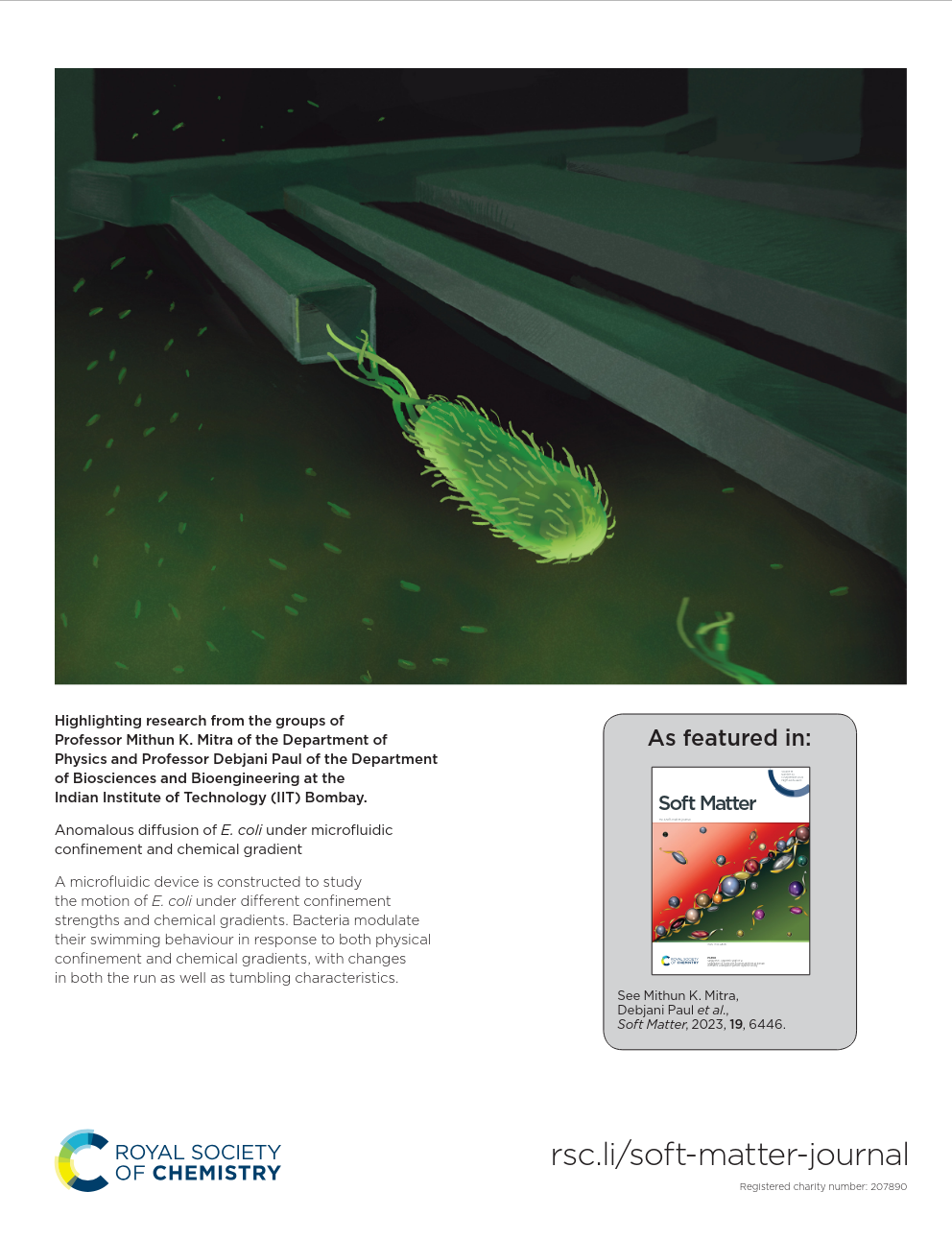
In tight spaces and chemical gradients, bacteria don't just slow down — they switch strategies. This study shows that E. coli swims faster and more persistently when confined or lured by nutrients, with runs that defy simple randomness, revealing how microbes adapt their motion to navigate complex, crowded environments.

Soft Matter, 2023

Read Paper

Interested in Joining Our Team?

We are always looking for exceptional motivated candidates to join the group for both theoretical and simulation projects. We have openings for graduate students looking to pursue a Ph.D. and postdoctoral fellows.

Explore Opportunities